Every laboratory furnace is built for one purpose—delivering reliable, repeatable heating results. However, many laboratories discover that achieving accurate temperature control is only part of the challenge. Long heating times, uneven temperature distribution, difficult maintenance, and expensive downtime often become bigger obstacles than the experiment itself.
A semi-circular split tube furnace chamber solves these problems by combining lightweight ceramic fiber insulation with embedded resistance wire heating technology. The result is a furnace chamber that heats faster, operates more efficiently, and is significantly easier to service than conventional refractory-lined designs.
Whether you are developing new materials, sintering powder samples, or performing high-temperature heat treatment, the right furnace chamber can improve both productivity and experimental consistency.
When Laboratory Furnaces Become the Bottleneck
Imagine a university materials laboratory preparing dozens of ceramic specimens every day.
Researchers need to heat multiple batches under identical conditions, but the existing furnace creates several challenges:
- The furnace requires a long warm-up period before reaching the target temperature.
- Heat distribution changes after months of operation.
- Replacing damaged heating elements requires dismantling most of the furnace.
- Every maintenance cycle interrupts scheduled experiments.
For research facilities where equipment is expected to operate every day, these issues increase operating costs while reducing laboratory efficiency.
Instead of focusing on the experiment, engineers spend valuable time waiting for equipment or arranging repairs.
A Smarter Furnace Chamber for Modern Laboratories
The semi-circular split furnace chamber was developed specifically to simplify laboratory furnace operation.
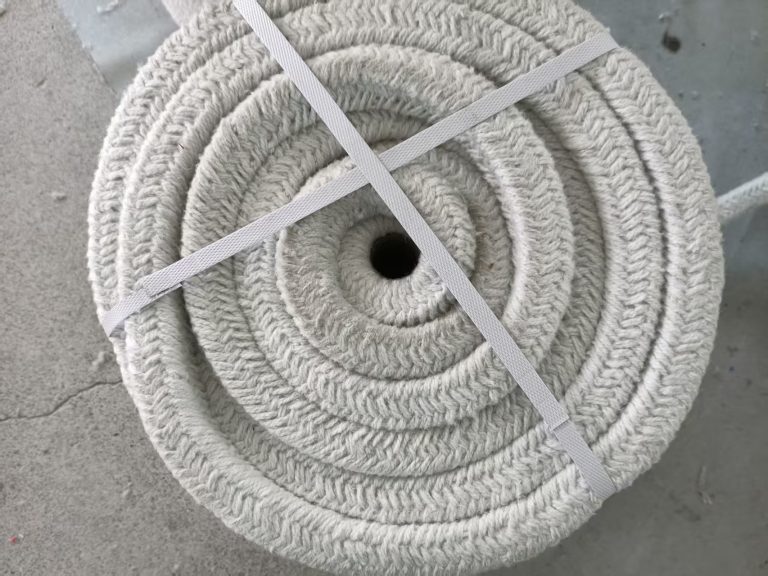
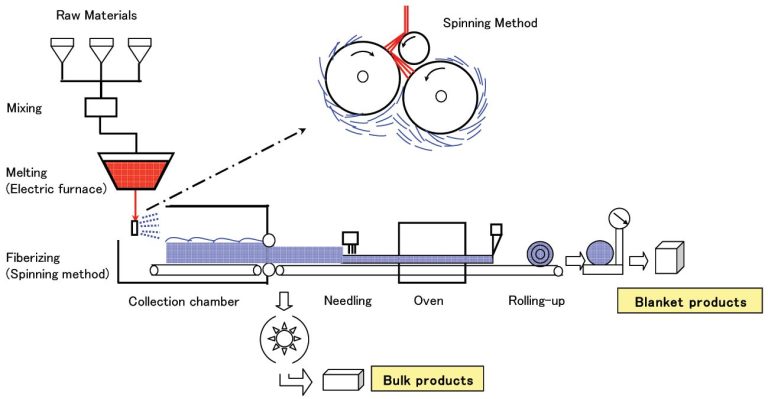
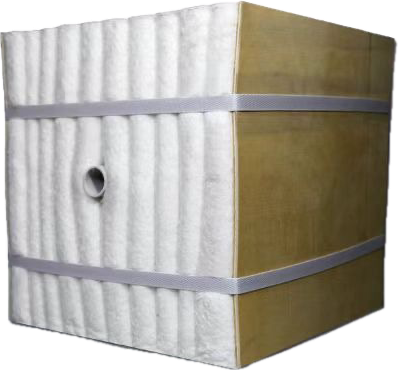
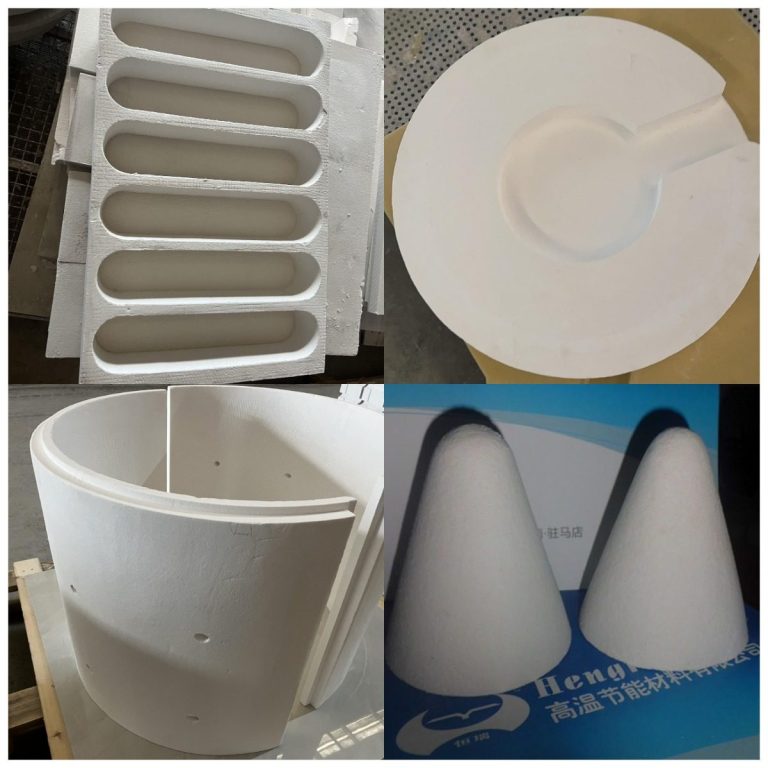
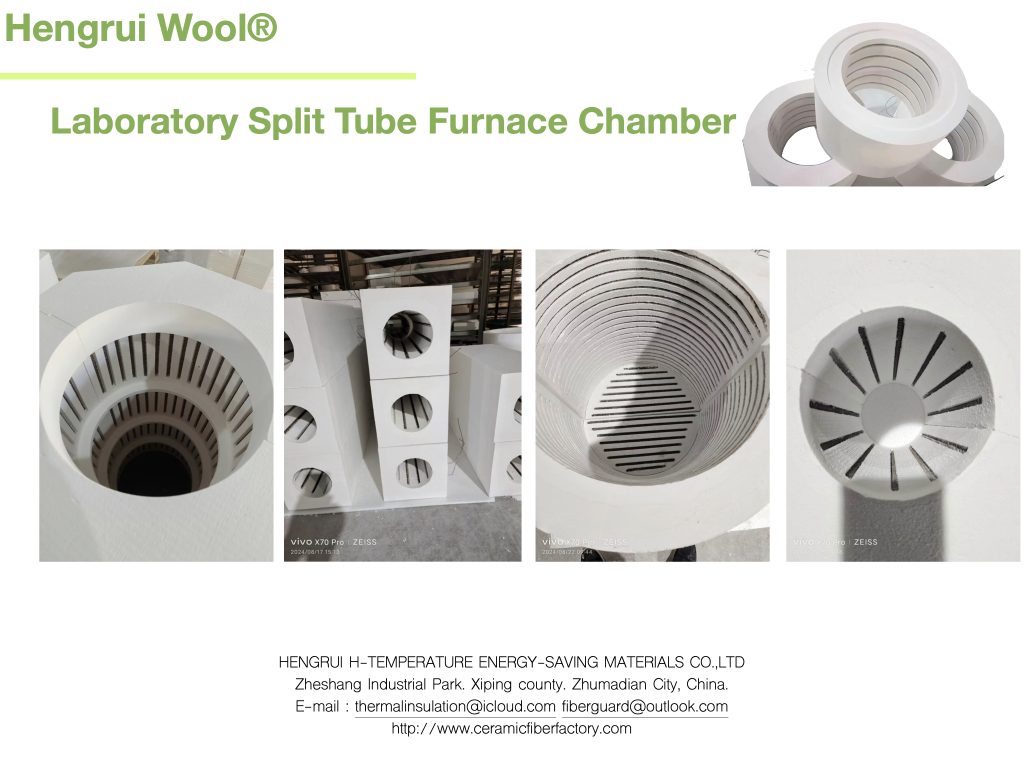
Unlike traditional heavy refractory linings, the chamber is manufactured from lightweight ceramic fiber using a fully automated vacuum-forming process. During production, FeCrAl resistance wire heating elements are permanently embedded inside the ceramic fiber structure, creating an integrated heating and insulation system. This design provides excellent thermal efficiency while protecting the heating elements from mechanical damage.
Because the chamber consists of two matching semi-cylindrical sections, installation and replacement become much simpler.
Instead of rebuilding an entire furnace, technicians can remove one section, inspect the heating system, and replace components with minimal downtime.
Faster Heating Means More Experiments Every Day
In research laboratories, waiting for a furnace to reach operating temperature is unproductive time.
The lightweight ceramic fiber construction stores far less heat than traditional dense refractory materials. More energy is transferred directly to the working chamber instead of heating the furnace walls.
The advantages include:
- Faster temperature ramp-up
- Reduced energy consumption
- Improved temperature response
- Shorter cooling time between experiments
For laboratories running multiple thermal cycles every day, these time savings quickly translate into higher equipment utilization.
Stable Temperature Improves Experimental Repeatability
Researchers depend on consistent heating conditions.
Whether producing battery materials, sintering advanced ceramics, or evaluating powder metallurgy samples, uneven heating can affect product quality and test results.
The embedded resistance wire layout distributes heat evenly throughout the furnace chamber. Depending on furnace design requirements, resistance wires can be arranged vertically or horizontally to optimize temperature uniformity for different heating zones.
Combined with the low thermal conductivity of ceramic fiber insulation, the chamber minimizes heat loss while maintaining stable operating temperatures.
The ceramic fiber material is suitable for continuous service up to approximately 1350°C, while the furnace chamber itself is designed for operating temperatures up to 1150°C, providing reliable performance for a wide range of laboratory applications.
Designed Around Real Laboratory Applications
Different laboratories require different furnace configurations.
A battery research center may require rapid thermal cycling.
A university laboratory may frequently replace quartz tubes of different diameters.
A ceramic materials laboratory may need customized heating zones for specialized sintering processes.
Instead of forcing laboratories to adapt to standard furnace dimensions, semi-circular split chambers can be manufactured in various inner diameters, lengths, voltages, and power ratings to match individual furnace designs. Multiple dimensional options are available, with custom tolerances and electrical configurations supporting OEM furnace manufacturers as well as laboratory equipment builders.
Applications Across High-Temperature Research
Semi-circular ceramic fiber furnace chambers are widely used in laboratories and industrial research environments, including:
- Tube furnaces
- Laboratory electric furnaces
- Material research laboratories
- Powder metallurgy
- Magnetic material processing
- Ceramic sintering
- Catalyst preparation
- Heat treatment research
- Process heating systems
- Pilot-scale thermal testing
Their combination of efficient insulation and integrated heating makes them suitable for laboratories requiring accurate, repeatable thermal performance over extended operating cycles.
Lower Maintenance, Longer Equipment Availability
Laboratory managers often evaluate equipment based not only on purchase price but also on lifetime operating cost.
The split construction significantly simplifies maintenance.
If inspection or replacement becomes necessary, engineers can access the heating chamber without demolishing the complete furnace lining.
Meanwhile, embedded resistance wires remain protected inside the ceramic fiber body, reducing the likelihood of accidental mechanical damage during operation.
For OEM furnace manufacturers, this design also shortens assembly time while simplifying future servicing for end users.
Choosing the Right Furnace Chamber Partner
Every laboratory has unique heating requirements.
Temperature range, heating rate, sample size, furnace tube diameter, and operating atmosphere all influence furnace chamber design.
Rather than supplying a one-size-fits-all product, HENGRUI provides customized semi-circular ceramic fiber resistance wire furnace chambers designed around specific laboratory equipment and process requirements.
From prototype research furnaces to production-scale laboratory systems, customized ceramic fiber heating chambers help improve thermal efficiency, reduce maintenance, and extend furnace service life.
When reliable heating performance is essential, selecting the right furnace chamber becomes an investment in both research quality and long-term operating efficiency.