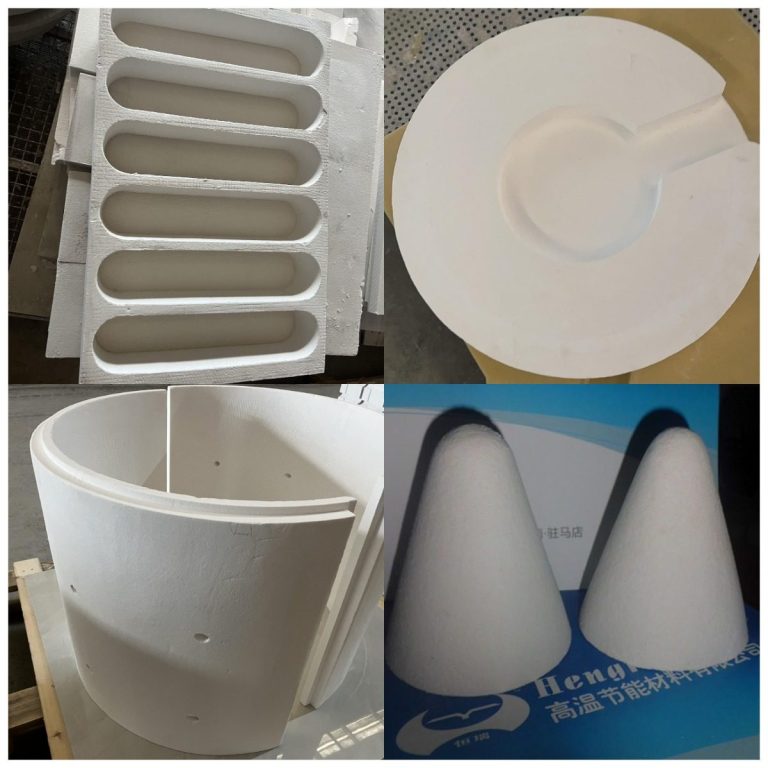
Ceramic Fiber Heating Modules for Different Applications and Temperature Ranges
Tube furnaces are widely used in laboratories, research institutes, universities, and industrial production for processes such as sintering, calcination, annealing, heat treatment, and material processing. Unlike conventional box furnaces, tube furnaces can provide a more controlled heating environment and support processes under specific atmospheres.
The heating chamber is one of the most important components of a tube furnace. Its design directly affects heating efficiency, temperature uniformity, energy consumption, heating response, and furnace service life.
For this reason, the heating element, refractory fiber insulation, furnace structure, operating temperature, and atmosphere should be considered as an integrated system.
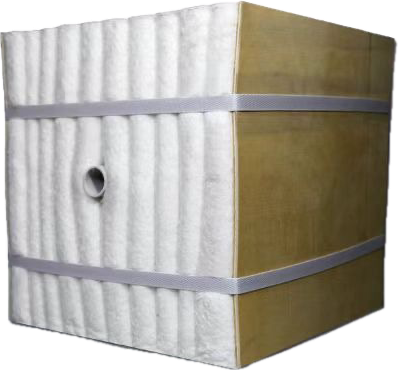
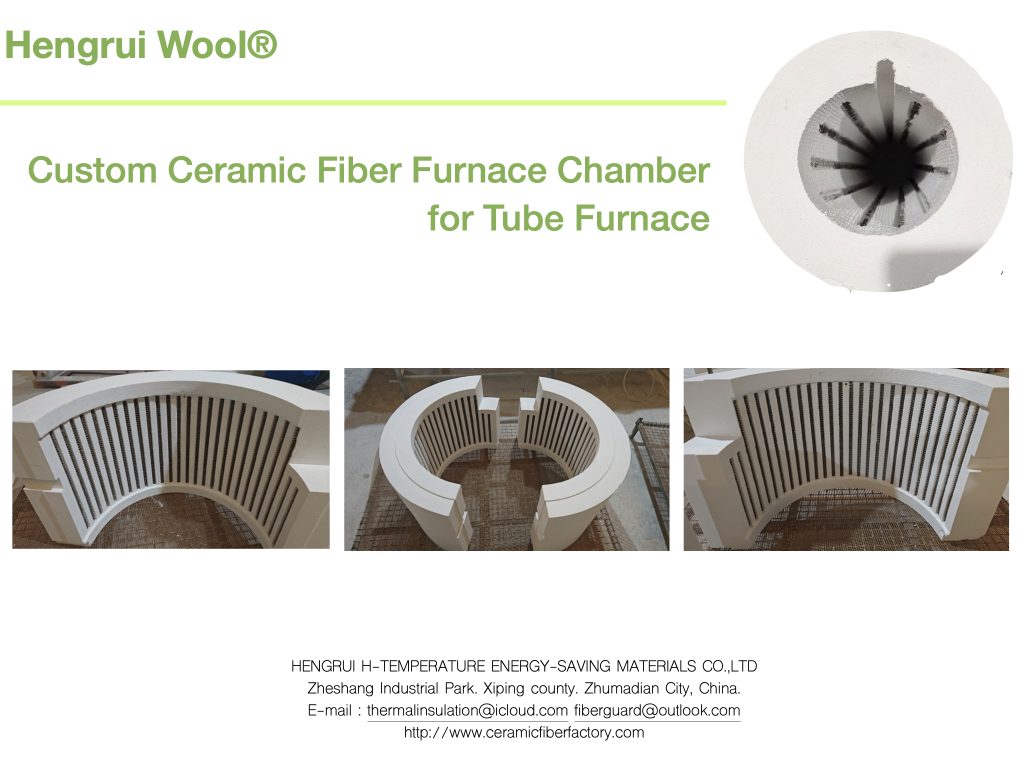
HENGRUI provides customized ceramic fiber resistance wire heating modules that combine heating and thermal insulation in a single component, offering an efficient solution for laboratory and industrial tube furnaces.
Why Is the Heating Chamber Important?
A well-designed heating chamber must provide more than high-temperature resistance.
Efficient Thermal Insulation
The chamber should transfer heat efficiently to the process tube while minimizing heat loss to the outside environment.
Low Thermal Mass
Ceramic fiber has a low density and low heat storage capacity compared with dense refractory materials. This allows the furnace to heat up and cool down more efficiently, providing:
- Faster heating response
- Lower heat storage
- Reduced energy consumption
- Faster cooling after processing
Good Thermal Stability
Tube furnaces are often subjected to repeated heating and cooling cycles. Refractory fiber materials offer good thermal shock resistance and help maintain the stability of the heating chamber during operation.
Recommended Heating Chamber Solutions for Different Applications
The correct heating chamber depends mainly on the required operating temperature, heating atmosphere, heating rate, and process requirements.
1. Tube Furnaces up to 800°C
Recommended Solution: Ceramic Fiber Heating Chamber + Resistance Wire
For low- and medium-temperature laboratory applications, a ceramic fiber heating module with embedded resistance wire is a practical solution.
Typical applications include:
- Laboratory material testing
- Drying and heating experiments
- Low-temperature calcination
- Research and development
- Small-scale heat treatment
The low thermal mass of ceramic fiber allows the furnace to respond quickly to temperature changes, making it suitable for applications requiring frequent heating and cooling cycles.
2. Tube Furnaces from 800°C to 1000°C
Recommended Solution: Ceramic Fiber Heating Module + FeCrAl Resistance Wire
This temperature range is common in laboratory research and material processing.
The integrated ceramic fiber heating module combines the thermal insulation performance of refractory fiber with the heating capability of embedded FeCrAl resistance wire.
It is suitable for:
- Powder calcination
- Ceramic processing
- Magnetic material treatment
- Material oxidation
- Laboratory sintering
- Heat treatment
This configuration offers a good balance between heating efficiency, temperature stability, energy consumption, and structural flexibility.
3. Tube Furnaces from 1000°C to 1150°C
Recommended Solution: High-Temperature Ceramic Fiber Heating Module + Spark HRE FeCrAl Wire
For tube furnaces operating at approximately 1000–1150°C, a high-temperature ceramic fiber heating chamber with embedded FeCrAl resistance wire can provide an efficient solution.
HENGRUI ceramic fiber resistance wire heating modules are designed for applications up to approximately 1150°C, depending on the complete furnace design and operating conditions.
Typical applications include:
- Powder metallurgy
- Magnetic material processing
- Advanced ceramics
- Sintering
- Laboratory research
- Industrial process heating
The integrated structure reduces heat loss while providing a compact and efficient heating system.
4. Higher-Temperature Tube Furnace Applications
When the required continuous operating temperature exceeds the recommended range of resistance wire heating modules, alternative heating systems should be considered.
Depending on the temperature requirements, the furnace may use:
- SiC heating elements
- MoSi₂ heating elements
- Other high-temperature heating systems
The insulation material should also be selected according to the actual operating temperature and atmosphere.
HENGRUI provides high-temperature ceramic fiber materials with continuous-use temperatures of up to approximately 1350°C, depending on the specific material grade and operating conditions.
How Does the Furnace Atmosphere Affect Heating Element Selection?
The operating atmosphere is an important factor in determining the performance and service life of the heating element.
For example, Spark HRE FeCrAl heating wire has different maximum permissible temperatures under different atmospheres:
| Atmosphere | Maximum Permissible Temperature |
|---|---|
| Dry air / Oxidizing atmosphere | Up to 1400°C |
| Moist air | Up to 1200°C |
| Nitrogen / Neutral atmosphere | Approximately 950°C |
These values should not be directly considered as the recommended operating temperature of a complete furnace heating module.
The actual operating temperature also depends on:
- Continuous operating conditions
- Heating cycle
- Heating element loading
- Furnace structure
- Process tube material
- Insulation design
Therefore, the heating element and furnace chamber should always be designed according to the complete operating environment.
Technical Advantages of HENGRUI Ceramic Fiber Heating Modules
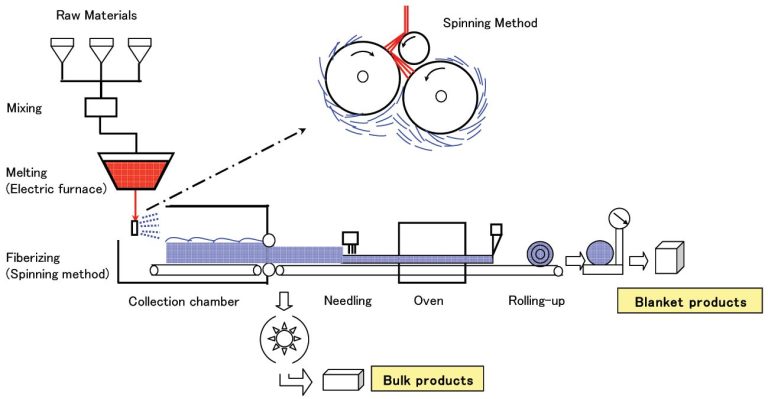
HENGRUI ceramic fiber resistance wire heating modules are manufactured using an automated vacuum-forming process, embedding the resistance wire directly into the refractory fiber material.
Integrated Heating and Insulation
The heating element and refractory insulation are combined into one component, simplifying furnace assembly and creating a compact heating structure.
Low Thermal Mass
The ceramic fiber material has an approximate density of 300–350 kg/m³, significantly reducing heat storage compared with dense refractory materials.
Low Thermal Conductivity
Typical thermal conductivity values include:
- 0.09 W/m·K at 600°C
- 0.15 W/m·K at 800°C
- 0.27 W/m·K at 1000°C
This helps reduce heat loss and improve thermal insulation efficiency.
Good Dimensional Stability
The ceramic fiber material has a linear shrinkage of no more than approximately 1% after 24 hours at maximum continuous operating temperature, helping maintain the structural stability of the heating chamber.
Customized Designs
The heating module can be customized according to:
- Furnace dimensions
- Process tube diameter
- Heating zone length
- Number of heating zones
- Required power and voltage
- Heating element arrangement
- Operating temperature
Typical Applications
Ceramic fiber heating modules are suitable for a wide range of tube furnace applications, including:
- Powder metallurgy
- Magnetic material processing
- Ceramic sintering
- Material calcination
- Heat treatment
- Laboratory research
- Material testing
- Industrial process heating
They can be used in both standard laboratory tube furnaces and customized industrial heating equipment.
Choosing the Right Tube Furnace Heating Chamber
Before selecting a heating chamber, several technical factors should be considered:
Operating Temperature
The required temperature determines the appropriate heating element and insulation material.
Furnace Atmosphere
Air, nitrogen, argon, and other atmospheres can affect the maximum operating temperature and service life of the heating element.
Heating Zone
The chamber should be designed according to the required uniform temperature zone and process tube length.
Heating Rate
For applications requiring rapid heating and temperature response, a low-thermal-mass ceramic fiber heating module can provide significant advantages.
Process Tube Dimensions
The inner opening and chamber structure should be matched to the process tube diameter and furnace configuration.
Customized Tube Furnace Heating Chamber Solutions
The right heating chamber depends on the complete application requirements, including operating temperature, atmosphere, process tube dimensions, heating zone, power, voltage, and temperature uniformity.
HENGRUI provides customized ceramic fiber resistance wire heating modules that integrate heating and thermal insulation into a single component.
For applications up to approximately 1150°C, ceramic fiber heating modules with embedded FeCrAl resistance wire provide an efficient solution for laboratory tube furnaces, sintering furnaces, powder metallurgy, magnetic material processing, and other material processing applications.
For higher-temperature applications, alternative heating elements and high-temperature refractory fiber materials can be selected according to the specific furnace design.
Provide your tube furnace dimensions, required operating temperature, atmosphere, power requirements, and process tube specifications. HENGRUI can help develop a suitable customized heating chamber solution for your application.