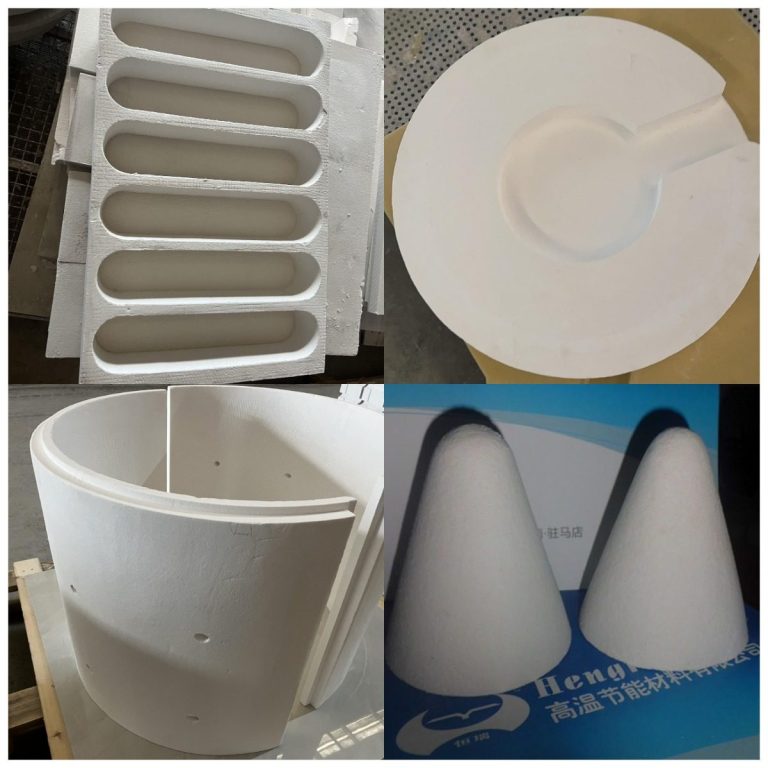
Choosing the right ceramic fiber blanket is not simply a matter of selecting the highest temperature rating. The actual performance of a blanket depends on several factors, including the operating temperature, atmosphere, chemical environment, density, thermal conductivity, shrinkage, mechanical strength, and installation method.
For applications ranging from industrial furnaces and petrochemical equipment to pizza ovens, catalytic converters, and high-temperature testing equipment, the correct ceramic fiber blanket can improve thermal efficiency, reduce heat loss, simplify installation, and extend service life.
This guide explains how ceramic fiber blankets are made, how to read their technical specifications, and how to select the most suitable grade for different applications.
What Is a Ceramic Fiber Blanket?
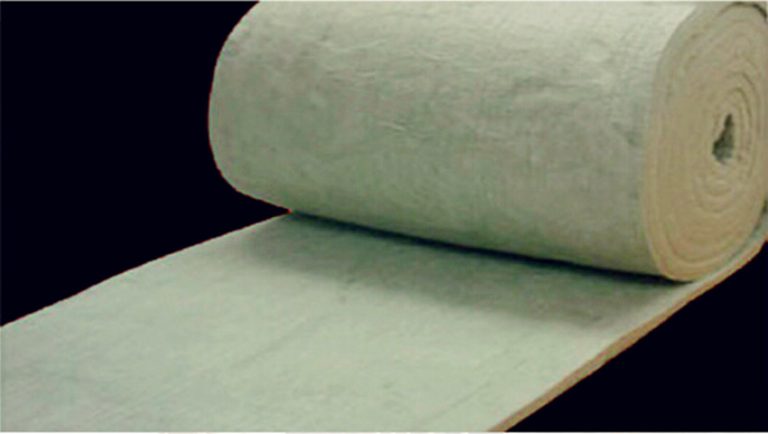
A ceramic fiber blanket is a flexible, lightweight refractory insulation material manufactured from high-purity inorganic raw materials. It is widely used where high-temperature insulation, low heat storage, and resistance to thermal shock are required.
Unlike traditional refractory bricks or castable materials, ceramic fiber blankets are:
- Lightweight
- Flexible
- Easy to cut and install
- Resistant to thermal shock
- Low in thermal conductivity
- Low in heat storage
- Suitable for complex geometries
Modern ceramic fiber blankets are available in different grades, commonly covering temperature classifications from approximately 1050°C to 1600°C, depending on the fiber composition and application requirements.
However, the highest temperature rating is not always the best choice. A better approach is to select the blanket according to the actual operating conditions of the equipment.
How Are Ceramic Fiber Blankets Manufactured?
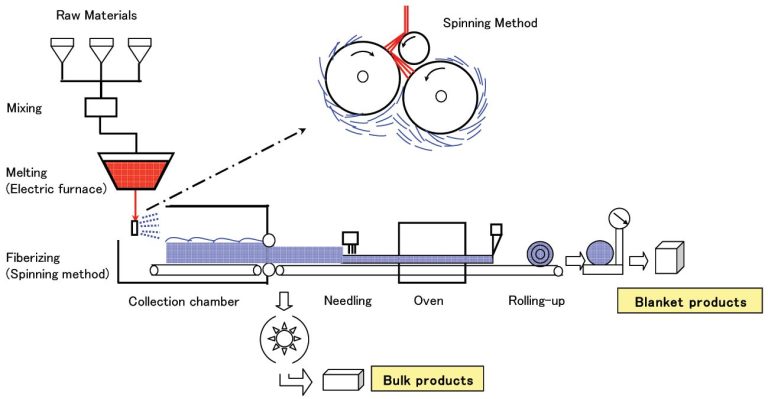
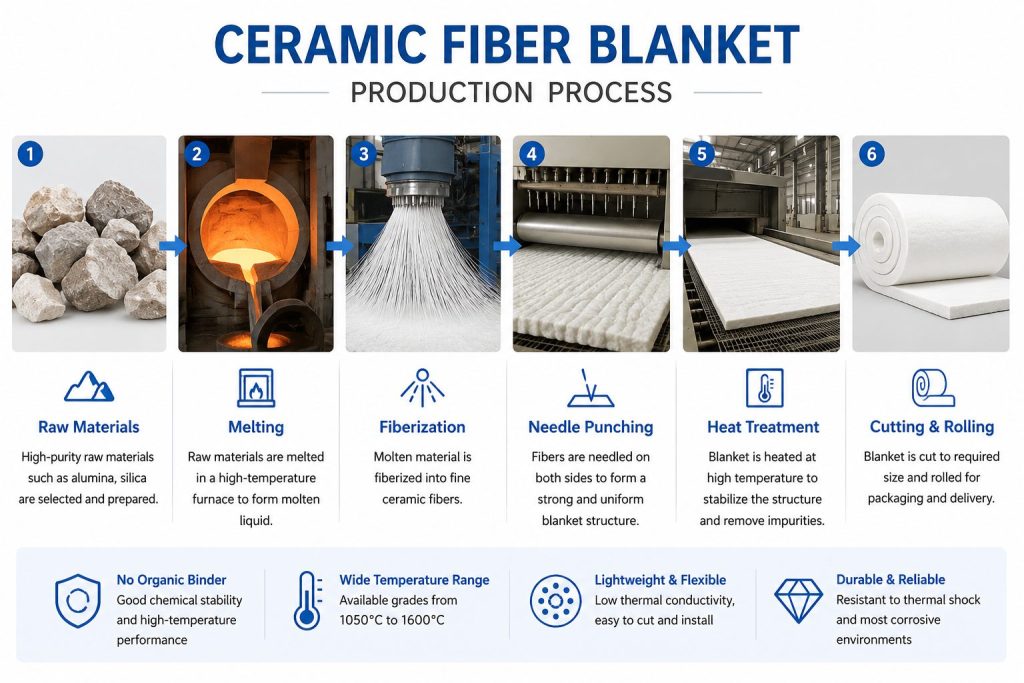
The production of a ceramic fiber blanket involves several key stages, from melting selected mineral raw materials and converting the molten material into fine ceramic fibers to forming the fibers into a blanket through a specialized needle-punching process.
HENGRUI ceramic fiber blankets are manufactured using specially developed ceramic fiber filaments and a double-sided needle-punching process, which improves fiber interlocking, tensile strength, resistance to delamination, surface flatness, and overall structural integrity. After forming, the blanket undergoes high-temperature treatment before being cut and rolled according to the required specifications.
The main production stages are illustrated below:
The First Step: Determine the Actual Operating Temperature
The most important factor when selecting a ceramic fiber blanket is the actual continuous operating temperature.
Do not select a product only because its classification temperature appears to match the maximum temperature of the equipment.A furnace rated at 1260°C does not necessarily require a blanket continuously exposed to 1260°C.
In practical applications, the temperature of the insulation may be lower than the internal furnace temperature. The correct selection should consider:
- Maximum operating temperature
- Continuous operating temperature
- Temperature fluctuation
- Heating and cooling cycles
- Local hot spots
- Duration of exposure
HENGRUI Ceramic Fiber Blanket Temperature Range
| Product Grade | Model | Maximum Service Temperature |
|---|---|---|
| HR1050 | C-RB | 1050°C |
| HR1260 | ST-RB | 1260°C |
| HR1260 | HP-RB | 1260°C |
| HR1350 | HA-RB | 1350°C |
| HR1400 | LZ-RB | 1400°C |
| HR1430 | HZ-RB | 1430°C |
| HR1500 | Cr-RB | 1500°C |
| HR1600 | PCF-RB | 1600°C |
For long-term service, it is generally advisable to avoid operating continuously at the absolute maximum service temperature.HENGRUI recommends that, under oxidizing or neutral atmospheres, the actual service temperature should generally be approximately 100–250°C below the maximum service temperature.Under reducing atmospheres, the recommended margin may be approximately 200–350°C below the maximum service temperature, depending on the specific operating environment.
The exact selection should always be confirmed according to the complete working conditions.
How to Choose Ceramic Fiber Blanket by Temperature
1. Around 1000°C–1100°C: HR1050
For applications with relatively moderate high-temperature requirements, the HR1050 ceramic fiber blanket can provide an economical insulation solution.
Typical applications include:
- Household appliances
- Built-in ovens
- Disinfection cabinets
- Integrated kitchen appliances
- Pizza ovens
- General thermal insulation
This grade is suitable when the actual insulation temperature does not require the performance of a higher-temperature ceramic fiber.Choosing a suitable lower-temperature grade can help avoid unnecessary material costs.
2. Around 1100°C–1260°C: HR1260
HR1260 ceramic fiber blankets are widely used in industrial thermal insulation.
Typical applications include:
- Tunnel kilns
- Heat treatment furnaces
- Industrial furnace linings
- High-temperature pipelines
- Petrochemical equipment
- Power equipment
- General kiln insulation
The HR1260 range includes different product formulations, allowing the selection to be further optimized according to the required thermal and mechanical performance.
3. Around 1200°C–1350°C: HR1350
For higher-temperature applications requiring improved thermal stability, HR1350 high-alumina ceramic fiber blankets are suitable for applications such as:
- Ceramic firing kilns
- Heat treatment equipment
- Steel industry equipment
- High-temperature industrial furnaces
- Certain petrochemical furnace components
The chemical composition and high alumina content help improve the material's high-temperature performance.
4. Around 1300°C–1430°C: HR1400 and HR1430
When the application involves high temperatures, frequent thermal cycling, or severe thermal conditions, HR1400 and HR1430 ceramic fiber blankets may be more suitable.
Typical applications include:
- High-temperature furnaces
- Ceramic kilns
- Glass industry equipment
- Steel production equipment
- High-temperature testing equipment
- Aerospace-related thermal insulation
For extremely demanding applications, temperature alone should not determine the selection. Shrinkage, chemical composition, thermal conductivity, and mechanical strength must also be considered.
5. Above 1400°C: HR1500 and HR1600
For special high-temperature applications, higher-grade ceramic fiber blankets may be required.
Potential applications include:
- High-temperature testing equipment
- Advanced thermal processing
- Special industrial furnaces
- High-temperature insulation systems
- Certain aerospace and advanced manufacturing applications
At these temperatures, the selection should be based on the complete operating environment rather than simply the nominal temperature.
Temperature Is Not the Only Selection Factor
A common mistake is to choose ceramic fiber blankets only according to their maximum service temperature.
In practice, a more complete selection process should consider at least six factors:
- Actual operating temperature
- Thermal conductivity
- Linear shrinkage
- Density
- Tensile strength
- Chemical environment
Let's look at each factor in more detail.
1. Density: How Does Density Affect Performance?
The density of ceramic fiber blankets influences:
- Mechanical strength
- Thermal conductivity
- Flexibility
- Compression resistance
- Heat storage
- Installation behavior
HENGRUI ceramic fiber blankets are available in densities of:
96 kg/m³, 128 kg/m³, 140 kg/m³, and 160 kg/m³
A lower-density blanket is generally:
- Lighter
- More flexible
- Easier to install
- Suitable for irregular surfaces
A higher-density blanket generally offers:
- Better mechanical strength
- Better resistance to compression
- Improved structural stability
However, higher density does not automatically mean better thermal insulation in every application.
The correct density depends on whether the primary requirement is flexibility, thermal insulation, mechanical strength, or resistance to compression.
2. Thermal Conductivity: A Key Indicator of Insulation Efficiency
Thermal conductivity indicates how easily heat passes through the insulation material.
A lower thermal conductivity generally means better insulation performance under the same conditions.
However, thermal conductivity varies with:
- Temperature
- Density
- Fiber composition
- Material structure
According to the HENGRUI technical data, the thermal conductivity of different ceramic fiber blanket grades varies depending on the test temperature and density.
For example, the 128 kg/m³ blanket series shows thermal conductivity values of approximately:
| Test Temperature | Thermal Conductivity |
|---|---|
| 600°C | 0.11–0.20 W/m·K |
| 800°C | 0.17–0.29 W/m·K |
| 1000°C | 0.28–0.31 W/m·K |
The thermal conductivity of insulation materials generally increases as the test temperature increases.
Therefore, when comparing different ceramic fiber blankets, it is important to compare data at the same test temperature and density.
3. Linear Shrinkage: Why Does It Matter?
When ceramic fiber is exposed to high temperatures for long periods, it may experience permanent linear shrinkage.
Excessive shrinkage can lead to:
- Gaps between insulation layers
- Reduced insulation thickness
- Increased heat loss
- Local hot spots
- Reduced service life
HENGRUI ceramic fiber blankets show different linear shrinkage levels depending on the product grade and test temperature.
The technical index includes shrinkage data ranging from:
- ≤3.0% for many grades
- ≤1.0% for the HR1600 PCF-RB grade under its specified test condition
For long-term high-temperature applications, shrinkage resistance becomes increasingly important.
A blanket that has a higher nominal temperature rating but excessive shrinkage may not be the best choice for long-term service.
4. Tensile Strength: Important During Installation and Operation
Tensile strength measures the ability of the blanket to resist pulling forces.
This is particularly important when the material must be:
- Wrapped around pipes
- Installed vertically
- Fixed to furnace walls
- Cut and shaped during installation
- Removed and reinstalled during maintenance
HENGRUI ceramic fiber blankets have tensile strength values ranging from approximately 55 to 75 kPa at 128 kg/m³, depending on the product grade.
The double-sided needle-punching process helps improve the fiber interlocking structure, which contributes to better tensile strength and resistance to delamination.
For complex installations, a stronger blanket can be easier to handle and less likely to tear during installation.
5. Chemical Composition: The Basis of High-Temperature Performance
The chemical composition of a ceramic fiber blanket directly affects its temperature resistance and high-temperature stability.
The HENGRUI product range includes different compositions based on:
- Alumina
- Silica
- Zirconia
- Chromium oxide
For example:
- Higher alumina content can support high-temperature performance.
- Zirconia-containing compositions can provide improved high-temperature capability.
- Chromium-containing fiber grades are designed for special high-temperature applications.
- Polycrystalline fiber grades offer higher temperature performance for demanding thermal environments.
The correct chemical composition should be selected according to the operating temperature and atmosphere.
6. Chemical Environment: Will the Blanket Be Exposed to Corrosive Substances?
Thermal insulation does not operate in a vacuum.
In real industrial applications, ceramic fiber may come into contact with:
- Oil
- Water
- Steam
- Process gases
- Chemical vapors
- Acidic substances
- Alkaline substances
HENGRUI ceramic fiber blankets do not contain organic binders and therefore offer good chemical stability.
The material can resist attack from many corrosive chemicals. Even when the blanket is exposed to oil, water, or steam, its basic thermal insulation and refractory properties do not change simply because of wetting.
However, the specific chemical environment should always be evaluated before final material selection, particularly where strong corrosive chemicals are involved.
How to Choose Ceramic Fiber Blanket for Different Applications
The same ceramic fiber blanket should not necessarily be used for every application.The operating temperature, mechanical conditions, and installation method can be very different.
Petrochemical Industry
Ceramic fiber blankets are commonly used for:
- Furnace insulation
- Pipeline insulation
- Equipment insulation
- High-temperature process systems
For petrochemical applications, important factors include:
- Continuous operating temperature
- Chemical environment
- Thermal cycling
- Mechanical stability
Power Industry
Power generation equipment often requires reliable thermal insulation for high-temperature components.
Ceramic fiber blankets may be used for:
- Boiler insulation
- High-temperature pipelines
- Thermal equipment
- Furnace components
In these applications, thermal efficiency and long-term dimensional stability are important.
Tunnel Kilns and Ceramic Firing Kilns
Tunnel kilns are exposed to continuous high-temperature operation.
Ceramic fiber blankets may be used for:
- Kiln roof insulation
- Sidewall insulation
- Expansion joints
- Door sealing
- Backup insulation
For these applications, the selected grade should have suitable temperature capability and low shrinkage.
Glass Industry
Glass processing involves high temperatures and frequent thermal cycling.
Ceramic fiber blankets may be used in:
- Glass melting equipment
- Glass tempering equipment
- Furnace insulation
- Thermal protection components
High-temperature stability and resistance to thermal shock are particularly important.
Heat Treatment
Heat treatment furnaces may experience repeated heating and cooling cycles.
The insulation must withstand:
- Thermal cycling
- Mechanical handling
- Repeated installation and maintenance
In these applications, tensile strength and resistance to delamination are important in addition to thermal performance.
Steel and Metallurgy
Steel production involves extremely demanding thermal conditions.
Ceramic fiber blankets may be used for:
- Furnace insulation
- Hot equipment insulation
- Heat treatment systems
- Thermal barriers
The selection should be based on temperature, atmosphere, mechanical conditions, and required service life.
Aluminum Electrolysis
The aluminum industry requires thermal insulation materials that can withstand high temperatures and demanding operating environments.
Ceramic fiber blankets may be used in suitable insulation and thermal protection applications, depending on the specific equipment and process conditions.
Automotive Catalytic Converter Insulation
In automotive applications, ceramic fiber materials may be used as thermal insulation or as part of catalytic converter insulation systems.
The material may need to withstand:
- High temperatures
- Vibration
- Thermal cycling
- Restricted installation space
For this type of application, mechanical integrity and resistance to vibration may be as important as the nominal temperature rating.
Household Appliances
Ceramic fiber blankets can also be used in:
- Built-in ovens
- Pizza ovens
- Disinfection cabinets
- Integrated kitchen appliances
These applications often require:
- Compact insulation
- Low heat loss
- Lightweight construction
- Good thermal stability
For relatively moderate operating temperatures, selecting an unnecessarily high-temperature ceramic fiber grade may increase cost without providing meaningful benefits.
High-Temperature Testing Equipment
High-temperature testing equipment may operate under extreme and highly variable conditions.
The selection should consider:
- Maximum temperature
- Heating rate
- Thermal cycling
- Test atmosphere
- Required dimensional stability
For advanced high-temperature testing, higher-grade ceramic fiber blankets may be required.
A Practical Ceramic Fiber Blanket Selection Process
If you are unsure which ceramic fiber blanket to choose, the following process can help.
Step 1: Confirm the Actual Temperature
Do not only provide the furnace's rated temperature.
Confirm:
- Actual insulation temperature
- Maximum temperature
- Continuous temperature
- Heating cycle
Step 2: Identify the Working Atmosphere
Determine whether the application operates under:
- Oxidizing atmosphere
- Neutral atmosphere
- Reducing atmosphere
- Vacuum
- Chemical atmosphere
The atmosphere can influence the recommended service temperature and material selection.
Step 3: Check the Required Thickness
The required thickness depends on:
- Target external surface temperature
- Heat loss requirements
- Available installation space
- Equipment structure
A higher temperature rating does not automatically compensate for insufficient thickness.
Step 4: Select the Density
Choose the density according to the application:
- Flexible wrapping: lower or medium density
- Furnace lining: medium or higher density
- Mechanical loading: higher density may be preferred
- Space-limited insulation: optimize density and thickness together
Step 5: Compare Thermal Conductivity
Always compare thermal conductivity at the same temperature and density.
A datasheet value at 600°C cannot be directly compared with a value measured at 1000°C.
Step 6: Check Shrinkage
For long-term high-temperature operation, low shrinkage is particularly important.
This is especially true for:
- Furnace walls
- Kilns
- High-temperature equipment
- Permanent insulation systems
Step 7: Consider Mechanical Strength
If the blanket will be:
- Installed vertically
- Wrapped around equipment
- Subjected to vibration
- Removed for maintenance
Then tensile strength and fiber interlocking should be considered carefully.
Common Mistakes When Selecting Ceramic Fiber Blanket
Mistake 1: Choosing the Highest Temperature Grade
A higher temperature grade is not automatically the best solution.
It may:
- Increase cost
- Be unnecessarily difficult to process
- Provide no meaningful advantage in a lower-temperature application
The best product is the one that meets the actual working conditions with an appropriate safety margin.
Mistake 2: Looking Only at the Maximum Service Temperature
Two blankets may both be rated at 1260°C but have different:
- Chemical compositions
- Densities
- Thermal conductivity
- Tensile strength
- Shrinkage
Mistake 3: Ignoring the Operating Atmosphere
The same ceramic fiber may perform differently under different atmospheres.
Oxidizing, neutral, and reducing atmospheres should be evaluated separately.
Mistake 4: Choosing the Density Only According to Price
A lower-density blanket may be more economical, but it may not be suitable for applications requiring higher mechanical strength.
The density should be selected according to performance requirements rather than price alone.
Mistake 5: Ignoring Installation Conditions
A technically suitable blanket may still be difficult to use if it does not match the installation method.
Before selecting a product, consider:
- Whether it must be wrapped
- Whether it will be installed vertically
- Whether it will be compressed
- Whether it will be exposed to vibration
- Whether it will need to be removed and reinstalled
Why Choose HENGRUI Ceramic Fiber Blanket?
HENGRUI ceramic fiber blankets are designed for applications where thermal insulation performance, mechanical integrity, and long-term stability are all important.
Key features include:
Double-Sided Needle-Punched Structure
The special double-sided needle-punching process improves fiber interlocking, tensile strength, resistance to delamination, and surface flatness.
No Organic Binder
HENGRUI ceramic fiber blankets contain no organic binder, providing good chemical stability and reducing concerns associated with binder decomposition at high temperatures.
Multiple Temperature Grades
The product range covers approximately 1050°C to 1600°C, allowing customers to select a suitable material according to the actual working temperature.
Multiple Density Options
Different densities allow the insulation system to be optimized for:
- Thermal insulation
- Mechanical strength
- Flexibility
- Compression resistance
Suitable for Complex Applications
From industrial furnaces and tunnel kilns to household ovens and automotive components, ceramic fiber blankets can be customized according to the specific application.
Frequently Asked Questions
What is the best ceramic fiber blanket for a 1200°C application?
The answer depends on the actual continuous temperature of the blanket rather than the equipment's maximum rated temperature. An HR1260 product may be suitable for many applications, but the working atmosphere, thermal cycling, shrinkage, and required service life should also be evaluated.
Is a higher-density ceramic fiber blanket always better?
No. Higher density generally improves mechanical strength and compression resistance, but lower-density products may provide better flexibility and lower heat storage. The correct density depends on the application.
Does ceramic fiber blanket contain organic binder?
HENGRUI ceramic fiber blankets do not contain organic binders. This contributes to good chemical stability and stable performance under high-temperature conditions.
Can ceramic fiber blanket be used when exposed to water or steam?
HENGRUI ceramic fiber blanket can maintain its basic thermal insulation and refractory properties after being wetted by oil, water, or steam. However, the material should be properly dried before returning to high-temperature service, and the complete application conditions should be evaluated.
How do I choose between 1260°C and 1430°C ceramic fiber blanket?
Compare the actual continuous operating temperature with the recommended service temperature, not only the nominal maximum rating. If the application involves higher temperatures, severe thermal cycling, or greater thermal stability requirements, a higher-temperature grade may be more suitable.
How thick should a ceramic fiber blanket be?
The required thickness depends on the target heat loss, surface temperature, equipment temperature, available space, and insulation design. For a precise recommendation, the application temperature and required thermal performance should be evaluated together.
Final Selection Checklist
Before ordering a ceramic fiber blanket, confirm the following:
- Actual continuous operating temperature
- Maximum operating temperature
- Operating atmosphere
- Chemical exposure
- Required insulation thickness
- Required density
- Thermal conductivity
- Linear shrinkage
- Tensile strength
- Installation method
- Thermal cycling conditions
- Required service life
The best ceramic fiber blanket is not necessarily the one with the highest temperature rating. It is the product that provides the right balance of temperature resistance, thermal insulation, dimensional stability, mechanical strength, chemical stability, and installation performance for your specific application.
If you are unsure which ceramic fiber blanket is suitable for your furnace, kiln, pipeline, oven, or high-temperature equipment, providing the working temperature, atmosphere, application, required thickness, and dimensions will allow HENGRUI to recommend a more appropriate product grade and insulation solution.