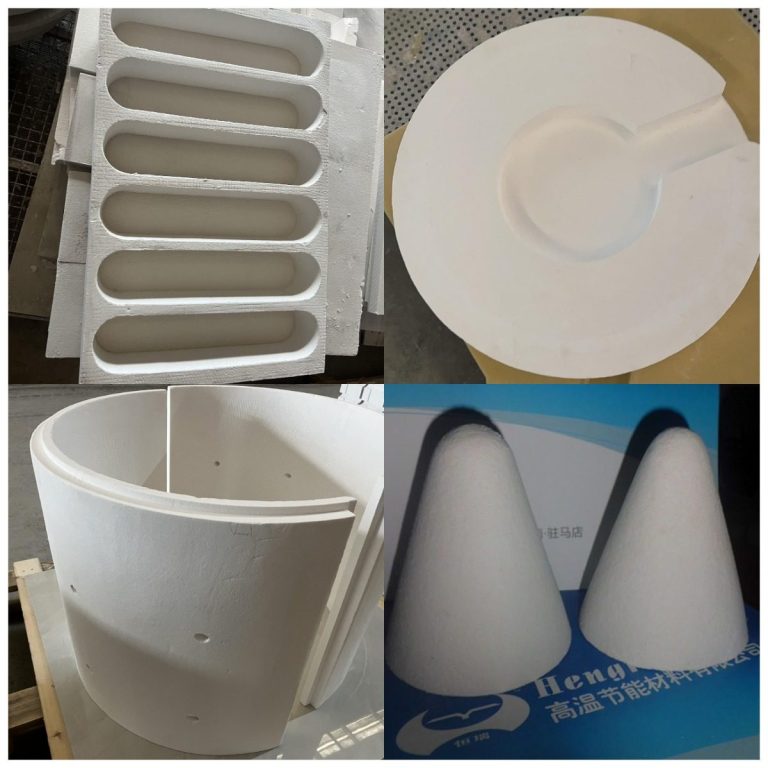
When industrial equipment operates at high temperatures, effective thermal insulation is essential for maintaining process stability, reducing heat loss, protecting equipment, and improving energy efficiency. Ceramic fiber blanket is a flexible, lightweight insulation material designed for demanding high-temperature applications where conventional insulation materials may be too heavy, rigid, or difficult to install.
HENGRUI ceramic fiber blankets are manufactured for industrial thermal insulation applications and can be used in furnaces, kilns, ovens, heat-treatment equipment, and other high-temperature systems.
What Is Ceramic Fiber Blanket?
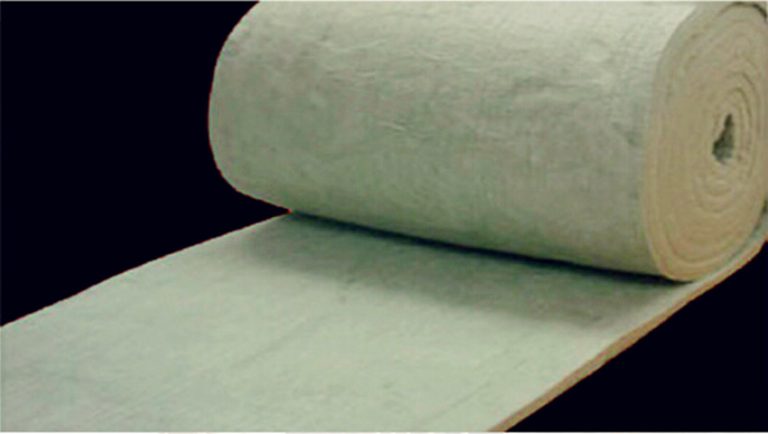
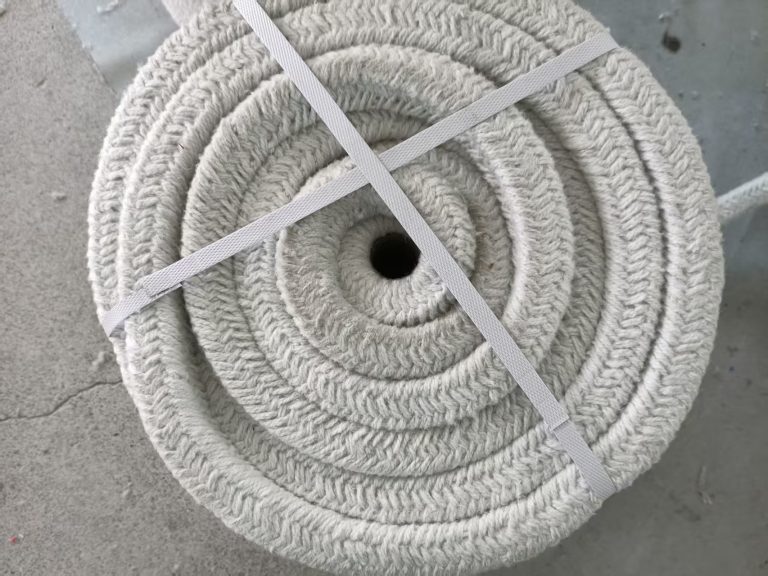
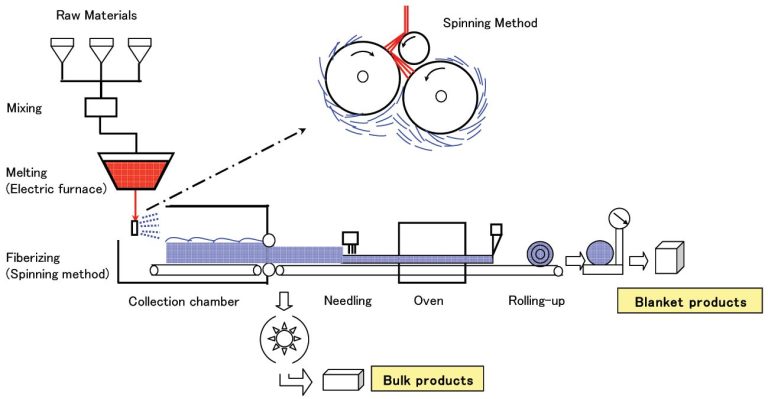
Ceramic fiber blanket is a flexible refractory insulation material made from high-purity alumina-silica ceramic fibers. The fibers are formed into a continuous blanket structure through a controlled manufacturing process, providing a combination of thermal insulation, flexibility, and mechanical integrity.
Unlike rigid insulation boards or traditional refractory materials, ceramic fiber blanket can be easily cut, folded, wrapped, and installed around complex surfaces. This makes it particularly useful when equipment has curved walls, irregular geometries, expansion joints, or limited installation space.
Depending on the application, ceramic fiber blankets can be used as:
- Furnace and kiln lining insulation
- Backup insulation behind refractory linings
- Heat-treatment furnace insulation
- Expansion joint insulation
- Pipe and duct insulation
- High-temperature equipment insulation
- Door and roof insulation
- Thermal barriers and heat shields
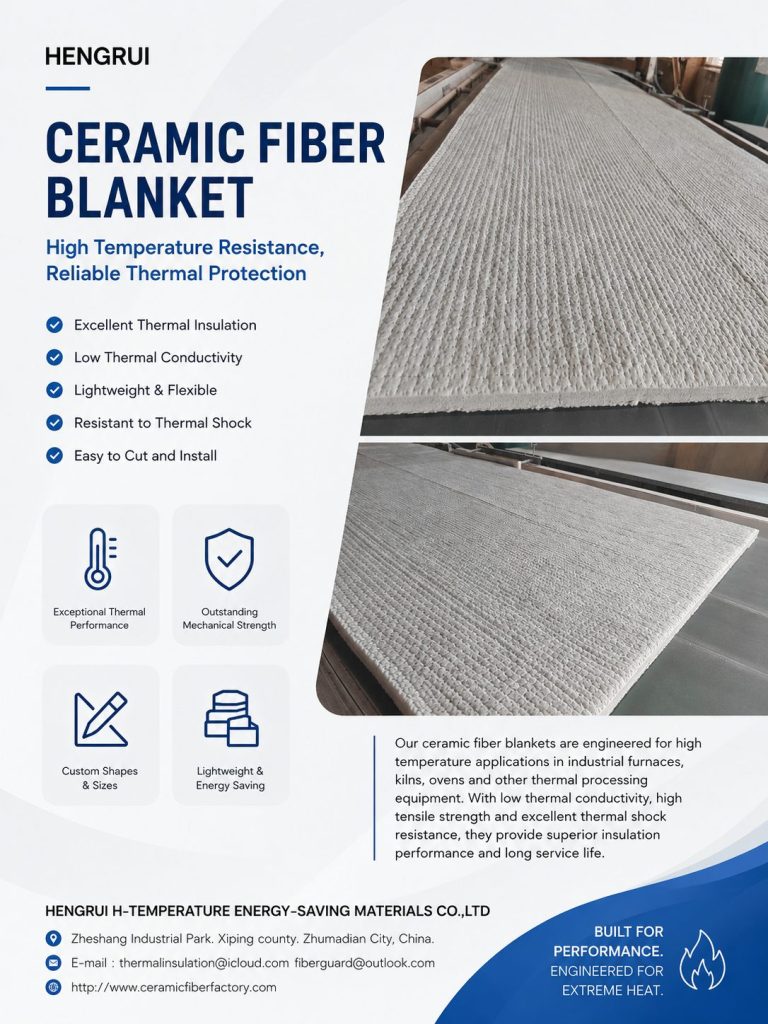
Why Choose Ceramic Fiber Blanket?
For industrial users, insulation performance is not only about temperature resistance. The material also needs to be easy to install, stable during operation, and suitable for the structure of the equipment.
HENGRUI ceramic fiber blankets offer several practical advantages.
1. Excellent Thermal Insulation
The fibrous structure contains a large amount of air, which helps reduce heat transfer. This provides effective thermal insulation while keeping the material lightweight.
By reducing heat loss through furnace walls and other high-temperature surfaces, ceramic fiber insulation can help improve overall thermal efficiency and reduce unnecessary energy consumption.
2. Lightweight Construction
Ceramic fiber blanket has a much lower weight than many traditional refractory lining materials.
This is particularly beneficial when designing or upgrading industrial furnaces. A lightweight lining can reduce the overall load on the furnace structure and make transportation and installation easier.
3. Flexible and Easy to Install
One of the biggest advantages of ceramic fiber blanket is its flexibility.
The blanket can be:
- Cut to the required dimensions
- Wrapped around curved surfaces
- Folded around corners
- Installed in multiple layers
- Combined with ceramic fiber board or modules
- Used to fill gaps and expansion joints
This flexibility can significantly simplify installation, especially when working with complex furnace geometries.
4. Good Resistance to Thermal Shock
Industrial furnaces and kilns frequently experience heating and cooling cycles. Rapid temperature changes can cause conventional refractory materials to crack or spall.
The flexible fiber structure of ceramic fiber blanket provides good resistance to thermal cycling, making it suitable for equipment that undergoes frequent start-up, shutdown, or temperature changes.
5. Easy Cutting and Processing
Ceramic fiber blanket can be easily processed using conventional cutting tools.
This allows installers to create customized pieces according to furnace drawings or on-site requirements. It is particularly useful for sealing irregular areas, corners, openings, and expansion joints.
Ceramic Fiber Blanket vs. Rigid Insulation
Choosing the right insulation depends on the structure and operating conditions of the equipment.
| Feature | Ceramic Fiber Blanket | Rigid Ceramic Fiber Board |
|---|---|---|
| Flexibility | Excellent | Limited |
| Complex surfaces | Easy to install | More difficult |
| Cutting and processing | Easy | Easy |
| Lightweight | Yes | Yes |
| Curved surfaces | Excellent | Limited |
| Expansion joints | Suitable | Less suitable |
| Structural rigidity | Flexible | Rigid |
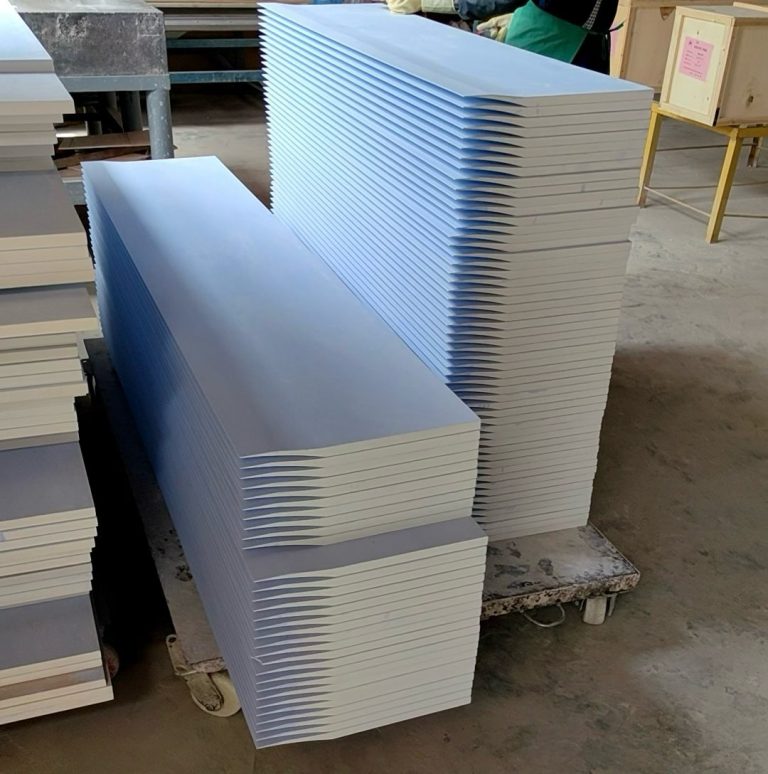
For flat surfaces requiring dimensional stability, ceramic fiber board may be a better choice. For curved surfaces, irregular areas, expansion joints, or multilayer insulation systems, ceramic fiber blanket provides greater installation flexibility.
Applications of Ceramic Fiber Blanket
Ceramic fiber blanket is widely used in industrial thermal processing equipment.
Industrial Furnaces
In industrial furnaces, ceramic fiber blanket can be used as furnace wall insulation, roof insulation, door insulation, and backup lining.
Its low thermal mass also makes it suitable for applications where rapid heating and cooling are important.
Kilns
Kilns used in ceramics, metallurgy, heat treatment, and other industries require reliable insulation to maintain the desired operating temperature.
Ceramic fiber blanket can be installed behind refractory materials or used as part of a lightweight kiln lining system.
Heat Treatment Furnaces
Heat treatment processes often require precise temperature control and repeated heating cycles. Effective insulation helps minimize heat loss and maintain a stable thermal environment.
Ceramic fiber blanket can be incorporated into the furnace lining to improve thermal efficiency.
Industrial Ovens
For high-temperature industrial ovens, ceramic fiber blanket can provide thermal insulation around walls, roofs, doors, and other areas where heat retention is important.
Pipes and High-Temperature Equipment
Because of its flexibility, ceramic fiber blanket can also be adapted for pipes, ducts, exhaust systems, and other irregularly shaped equipment.
Choosing the Right Ceramic Fiber Blanket
The correct insulation specification depends on the operating environment and installation requirements.
When selecting ceramic fiber blanket, customers should consider:
Operating Temperature
Select a fiber grade suitable for the maximum operating temperature of the application.
Density
Different densities provide different combinations of thermal insulation and mechanical strength.
Thickness
The required thickness depends on the target surface temperature, heat-loss requirements, available installation space, and overall insulation design.
Dimensions
Standard blanket dimensions can be supplied for general applications, while customized cutting can be considered for specific furnace designs.
Installation Method
The blanket may be installed as a single layer, multiple layers, or together with other refractory and insulation materials.
HENGRUI Ceramic Fiber Blanket Manufacturing
At HENGRUI, we focus on providing high-temperature insulation materials for industrial applications.
Our ceramic fiber products are manufactured with controlled fiber formation, needling, and finishing processes to provide consistent blanket structure and reliable insulation performance.
For customers with specific furnace designs, we can also discuss requirements such as:
- Material grade
- Operating temperature
- Density
- Thickness
- Blanket dimensions
- Quantity
- Installation method
- Customized cutting requirements
This allows the insulation solution to be selected according to the actual operating conditions rather than simply choosing a standard product.
Build a More Efficient High-Temperature Insulation System
For high-temperature furnaces and kilns, insulation performance directly influences energy consumption, equipment temperature, maintenance requirements, and production efficiency.
A well-designed ceramic fiber blanket lining can provide an effective combination of thermal insulation, lightweight construction, flexibility, and installation efficiency.
Whether you are replacing an existing refractory lining, designing a new furnace, or looking for insulation for a specific high-temperature application, HENGRUI can help you select a suitable ceramic fiber insulation solution.
Looking for the right ceramic fiber blanket for your furnace or high-temperature equipment?
Contact HENGRUI with your operating temperature, required thickness, density, dimensions, and application details. Our technical team can recommend a suitable specification for your project.