Industrial furnaces operate under high temperatures, repeated thermal cycles, and demanding production conditions. At the same time, furnace manufacturers need to reduce heat loss, shorten installation time, and improve the service life of the lining.
Modular ceramic fiber lining provides an efficient solution for these requirements. But when a furnace contains burners, heating elements, inspection ports, corners, openings, or other irregular structures, standard modules alone may not be enough.
This is where custom ceramic fiber shapes become particularly valuable.
Why Use Modular Ceramic Fiber Lining?
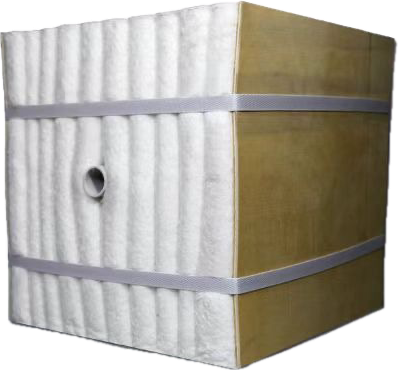
Compared with traditional dense refractory linings, ceramic fiber modules offer several advantages:
- Low thermal mass for faster heating and cooling
- Low thermal conductivity for effective heat insulation
- Lightweight construction that reduces the furnace lining load
- Good thermal shock resistance for repeated heating and cooling
- Fast installation with prefabricated modules
- Easy maintenance and replacement
For large flat furnace surfaces, standard ceramic fiber modules can provide efficient and economical insulation.
However, the most difficult parts of a furnace are often the areas that cannot be covered by standard modules.
Custom Ceramic Fiber Shapes for Complex Furnace Areas
Industrial furnaces rarely have completely flat and simple internal structures.
Typical difficult areas include:
- Burner openings
- Heating element penetrations
- Thermocouple holes
- Inspection ports
- Furnace doors
- Corners and transitions
- Curved sections
- Special mounting structures
If standard boards or modules are cut repeatedly on site, installation becomes more time-consuming and may result in unnecessary joints, material waste, or poor fitting.
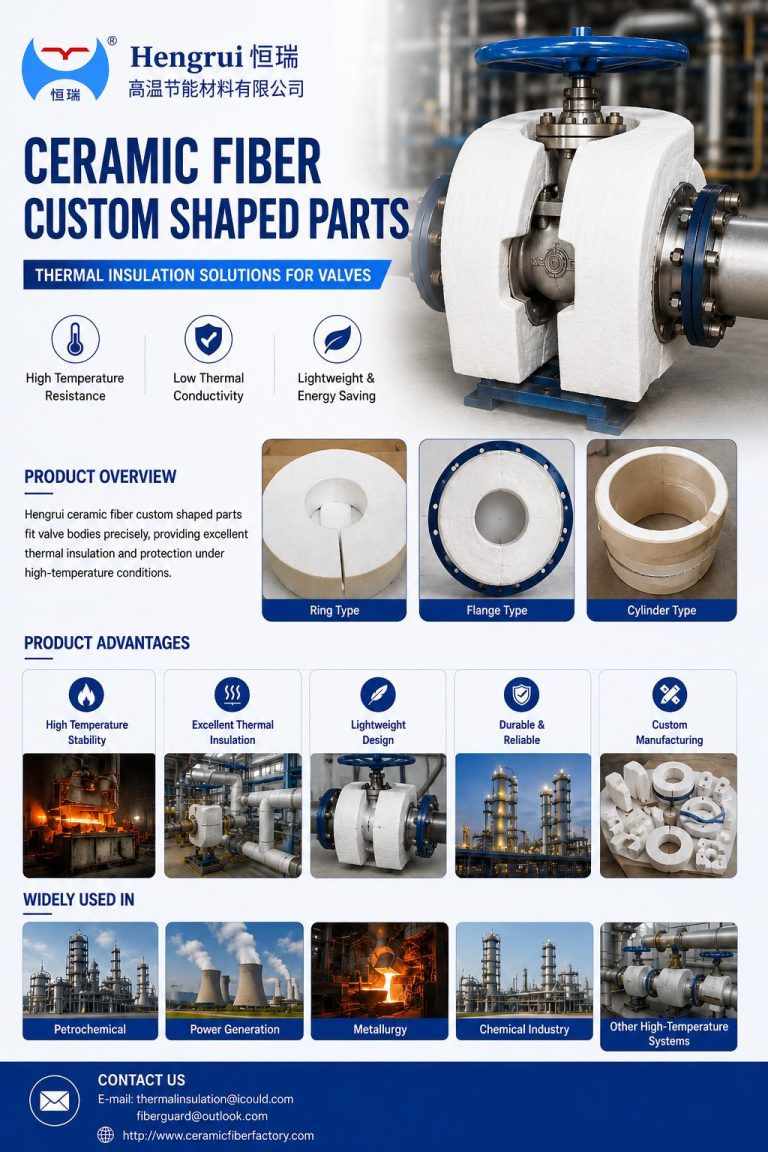
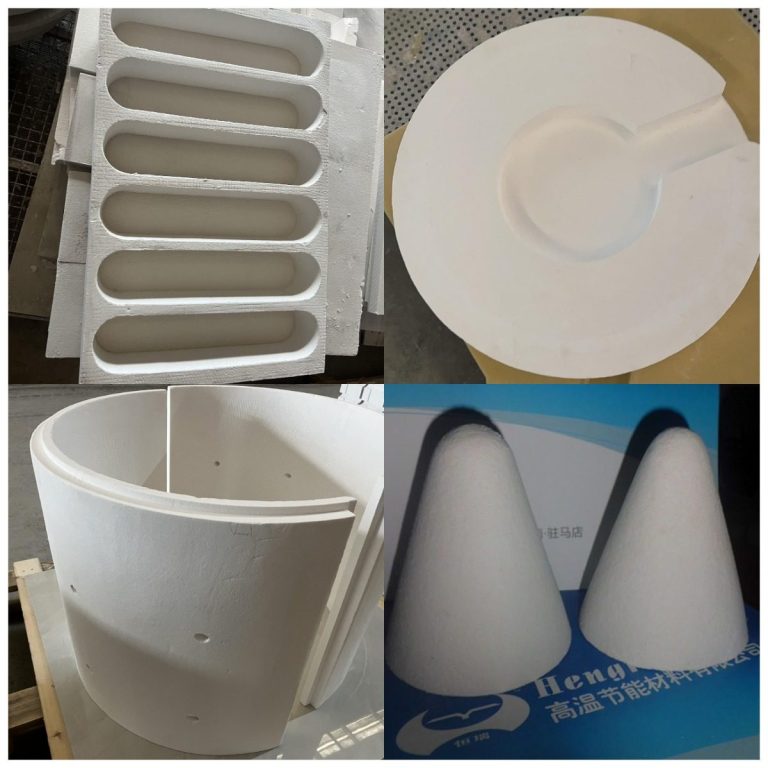
Custom vacuum formed ceramic fiber shapes solve this problem.
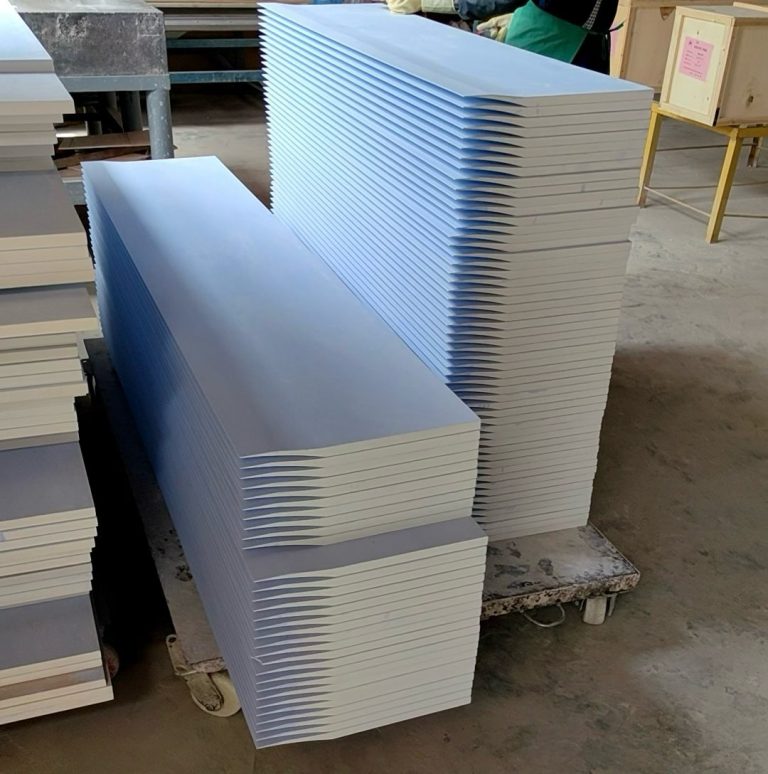
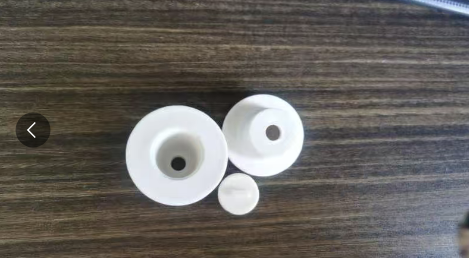
According to the customer's drawings, samples, or dimensions, ceramic fiber can be formed into specific geometries, including holes, grooves, curves, recesses, and other complex structures.
Instead of modifying the insulation to fit the furnace, the insulation is manufactured to fit the furnace.
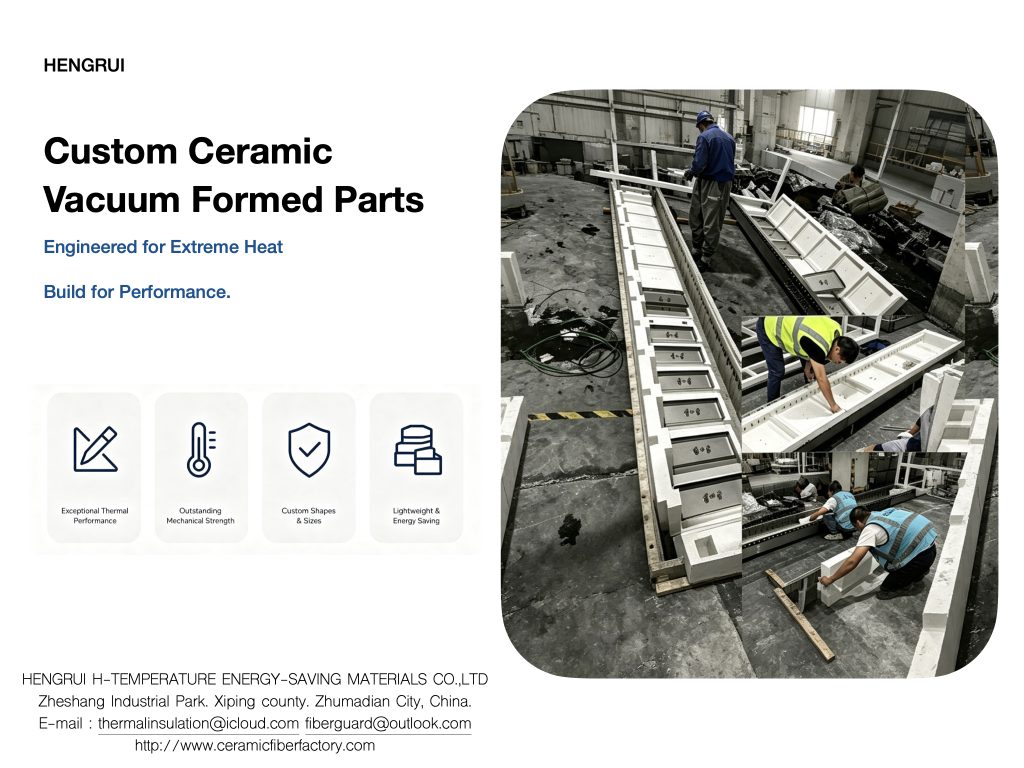
Key Advantages of Custom Ceramic Fiber Shapes
1. Precise Fit
Custom shapes are manufactured according to the actual furnace structure, helping reduce gaps and improve the consistency of the lining.
2. Faster Installation
Prefabricated components reduce cutting and modification work at the installation site, helping shorten furnace assembly time.
3. Better Thermal Efficiency
A well-designed insulation system helps reduce heat loss. Combined with the low thermal conductivity and low heat storage of ceramic fiber, it can contribute to improved furnace energy efficiency.
4. Suitable for Complex Designs
Vacuum forming makes it possible to manufacture components with special openings, angles, curves, and mounting features that are difficult to achieve with standard insulation products.
5. Reduced Material Waste
Instead of cutting large boards or blankets repeatedly on site, the required geometry can be manufactured directly, making material utilization more efficient.
A Complete Modular Furnace Lining Solution
The most effective furnace lining does not necessarily use one product everywhere.
A typical system can combine:
| Furnace Area | Recommended Solution |
|---|---|
| Large flat walls | Ceramic fiber modules |
| Furnace roof | Ceramic fiber modules / shaped parts |
| Burner openings | Custom ceramic fiber shapes |
| Heating element areas | Vacuum formed components |
| Corners & transitions | Custom shaped insulation |
| Doors & inspection areas | Custom modules / shaped parts |
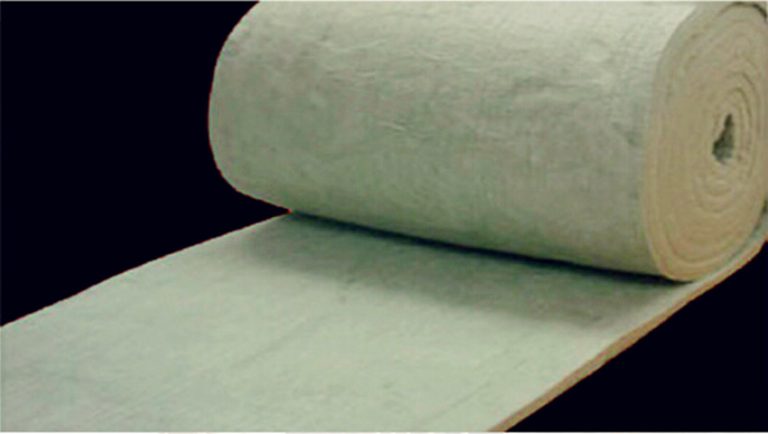
| Backup insulation | Ceramic fiber board or blanket |
This combination allows standard modules to handle large areas while custom ceramic fiber shapes solve the difficult details.
The result is a more integrated, efficient, and installation-friendly furnace lining system.
From Your Drawing to the Finished Part
At Hengrui, customized ceramic fiber shapes can be manufactured according to:
- CAD or PDF drawings
- 3D models
- Existing samples
- Equipment photographs
- Dimensions and specifications
Our technical team can evaluate the operating temperature, geometry, density, mechanical requirements, and installation method before recommending the appropriate material and manufacturing process.
Our high-temperature fiber solutions cover applications from approximately 1260°C to 1800°C, depending on the selected material and operating conditions.
Whether you need a simple shaped panel or a complex three-dimensional component, we can develop the insulation around your actual furnace design.
Looking for Custom Ceramic Fiber Shapes?
If standard ceramic fiber modules cannot completely solve your furnace lining requirements, custom-shaped insulation may be the answer.
Send us your drawing, sample, or furnace photos.
Our team can help you evaluate the suitable ceramic fiber material and develop a customized shape for your industrial furnace.
Hengrui — Custom Shapes. Efficient Insulation. Better Furnace Performance.
Contact us today for a customized ceramic fiber shape quotation.